Sunday, January 31, 2016

We interrupt this message...

I’ve been trying to write the next 3 posts for almost a year.  I’ve written and re-written countless pages, trying to figure out how to accurately describe my perspective, but it just hasn’t felt whole or right.  I realize there was something I danced around in those three posts that I just need to address separately.  So before I can get into the rest of my divergence from popular feminism,  I need to talk about fear.  I need to delve into its causes, consequences, and forms.  

We are mortal.  We feel pain.  We get sick.  We die.  We know these are always possibilities because of our ability to imagine and anticipate, and many of us go to great lengths to avoid, mitigate, or put off those events.  This aversion to death and pain is deeply rooted in our primitive brains and has helped to perpetuate the human race through countless dangerous and traumatic circumstances.  It’s a useful tool and an extremely powerful motivator, meant to help us avoid unpleasant and deadly circumstances.  But I strongly believe that fear itself is a poor companion and guide.  Like our sex drive, fear is just another survival process built into our physiology that doesn’t give a lick about our overall sense of peace, joy, fulfillment, or even love.  The process is there to propagate our carbon-based existence, not our spiritual or temporal happiness or wellbeing.  Thus fear must be perpetually and properly managed, or else it will pathologically influence and control our choices. 

Sidenote: those that haven’t seen Inside Out need to stop reading this and go take care of that right now.  It does an incredible job of creating a verbal framework around some of the intangible and often unintelligible concepts I’m going to be describing.   

If you think about your different emotions and rationale as the team that runs your cognition and decisions, fear is the absolute worst kind of team leader. It is neither concerned with nor capable of things like trust, faith, or forgiveness.  Its 100% interested in self-preservation and its sole focus is avoidance of unpleasant things.  It has no long-term vision and is bad at managing priorities.  It avoids transparency and vulnerability and is constantly in competition with others for greater security and safety.  It forms relationships to find protection and assurance, not love or progression.  

If fear is the driving emotion or motivator in our lives, it’s the white-knuckled crank that refuses to enjoy the drive because to it, the purpose of that drive it to survive, not thrive. It is overly reactive, easily stressed out by any unexpected circumstances, and it absolutely abhors chaos, risk, or getting too close to others.  It refuses to take detours for scenery or pleasure, and it doesn’t want any new thoughts or other emotions distracting it from the task at hand.  The irony is that fear's ‘task at hand’ is to avoid conditions that are ultimately inevitable; namely, pain and death.

We are complex, gregarious, and mortal creatures, and full joy is rarely achieved in the absence of pain.  Often we find fulfillment, happiness, and peace by trudging through perilous circumstances.  Fear would steer us away from all threats, but much of that effort accomplishes nothing.  Life is hard, unjust, and temporal.  Pain is a part of that life.  Fear tries to avoid it, but life has little respect for that evasion, and eventually forces us down one path of pain or another.  Like a two year old avoiding her bed time, these wasted efforts are sometimes more painful than the fate itself.  Living to avoid pain and death is like jumping to avoid gravity. Good luck.

That being said, I do think fear has a place in our internal world.  If you burn your hand on a hot stove, fear is very good at reminding you to avoid that action in the future.  And I think it is important to acknowledge when we feel fear.  It quickly brings our attention to threats, and that’s sometimes a good thing. But I’m almost positive that fear should never be allowed to navigate or take precedence over our other inner voices.  That is no small task.  Fear is a backseat driver, drama queen, and total control freak.  Life is treacherous, unpredictable, risky, and wild.  Fear constantly uses this chaos to support its case for taking charge, but fear is a psychopathic sociopath.  It is selfish and quick to see others as competitive threats to its survival.  If left to its own devices, fear will create nothing but a long, miserable, and deeply lonely life. 

Oh, and one more thing.  Fear has a hard time distinguishing between psychological threats and mortal ones.  And while modern society has mitigated a lot of mortal threats, it has created countless new psychological ones in the process (whether they should or not is another topic for another time).  The blog “wait but why” addressed this brilliantly in Taming the Mammoth: Why You Should Stop Caring What Other People Think.  Read it. It may change your life. 

The gist of that post is that modern-day society’s diversity and social-networking capacities have exposed us to unprecedented social and internal conflict.  This inundation of psychological threats has made fear’s evolutionary advantages obsolete and even counterproductive in creating a life worth living.  I might argue that this disadvantage has been the case since civilizations first formed, but it is definitely more pronounced and exacerbated in our highly connected and diverse society.  Think of the rampant organizational distrust, social isolation, pandemic-like depression and anxiety, and the uptick in suicides and drug overdoses over the last 15 years, most of which can be accounted for by middle aged, white Americans.  But how can such a privileged group be so psychologically under siege?  


In a diverse world, our fear-fueled impulses to conform to and get approval from society (because there is safety in numbers) becomes more intense but also incredibly taxing.  Think of how much mental energy it takes to empathize or feel safe with a stranger who views the world very differently from you.  Now multiply that unit of energy by the number of people you have the potential to interact with.  The more connected we are, the more opportunity we have for disagreements, conflict, social chaos, and, therefore, anxiety.  Add anonymity and the element of surprise to that potential conflict (like, say, an internet troll or terrorist), and social anxiety can quickly escalate into paranoia, bigotry, and demographic isolation.  These divisions are a product of fear's hyper-vigilant efforts to find protection in the herd.  Thus, the ability to incite fear in diverse groups is one of the best ways to divisively turn people against one another.  


One popular method of coping with these divisions is to use the phrase “what an idiot” as a means of reassurance. We disparage those with whom we disagree to mitigate the threat of a new idea or internal conflict. Engaging with and trying to understand the perspective of our ideological opponents requires us to be vulnerable, unsure, and (heaven forbid!) humble.  An ancient survival tactic that fear uses to avoid that vulnerability is to find others who think like us, amass an army, and make war with, marginalize, or disenfranchise those who see things differently.  Because both sides are doing the same thing, this only causes disagreements to escalate, even to the point where human lives are being sacrificed in an attempt to create ideological order.  In our highly-connected social world, these ideological armies can become infinitely large, giving members of each group even more surety that ‘their side’ is the ‘right side.’  Size and perceived moral superiority then encourages them to further abuse and remove themselves from their opponents.  And, ta-da!…we have an increasingly polarized and violent society.  But I’ve digressed…back to fear.


In some ways, psychological threats are worse than mortal threats.  They are often chronic, difficult to identify, and even harder to address.  While caves, homes, and villages have the capacity to give us temporary refuge from mortal threats, it’s much harder to find a reprieve from the threats created in and fostered by our own minds.  We are never at our best when we feel chronically under threat.  We don’t think as clearly, we lack self-control and long-term focus, we become emotionally erratic or abusive and often feel empty and unfulfilled.  Our fight or flight response helps us to act quickly, but not wisely. We are better as a whole when we fight fear as a whole.  Unfortunately, I see a lot of fear-mongering and divisive practices in popular feminism.  I think that those tactics do a poor job of nurturing gender equality because true equality is only achieved through unity. Thus, I have a pretty strong aversion to anything and anyone who employs fear to accrue and motivate followers. 

Again, I don’t think feminism is bad.  Again, I am absolutely on board with the objective of gender equality.   I just feel no need to declare myself as part of a herd that disparages or vilifies other herds.  Gender equality (and human equality) is a fundamental part of my faith, and I feel a spiritual obligation to support any measure that promotes it.  However, I do not accept that equality will ever be achieved if one group is fighting, disrespecting, or marginalizing another.  Inequality hurts us all, and I think the best way of progressing toward equality is by encouraging empathy, self-knowledge, and mutual empowerment, not fear, blame, and shame.  Pockets of feminism are adopting the attitude of addressing disparity is by lifting the whole.  Perhaps if they become the majority, the name will change and I could jump on board that train.  We're not there yet though, and the next three posts are going to address the current practices that I think are getting in the way.  

Sunday, March 22, 2015

Reason #2: Gender equality does not require gender equivalence

Disclaimer: Let me just preface with the fact that this particular post is really written to address the 98% of heterosexual humans that identify as either male or female, and is meant to examine their relationship with one another.  To the last 2%: you matter, you're important, but you may not relate to some of the issues I'm going to bring up, so please forgive my temporary exclusion.  

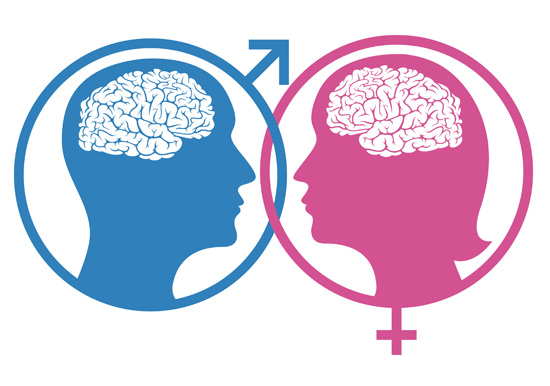
Men and women are not the same.  Their genetic, physical, and hormonal differences, regardless of cultural expectations and personal perceptions, lead to fundamental differences in their capacities, desires, experiences, and/or goals.  As humans, our bodies and brains do influence how we perceive the world.  To date, scientists have found around 100 differences between men's and women's brains, and study after study after study has shown how our physical structure influences our mental/emotional perceptions.  So before I flesh out Reason #2, it seems paramount to establish that men and women are structurally different, and that this has far reaching consequences.


For instance, estrogen, which does far more than run female reproductive organs, oscillates a LOT more in women than men and can even have an opposite effect on men.  This oscillation affects serotonin levels, endorphin production, and a host of other ambiguous processes that scientists have been trying to understand for decades.  Though I would argue this oscillation is ultimately beneficial, and part of what makes us so awesome, we cannot pretend that this oscillation does not affect on our choices and desires (anybody who has felt the tick-tok of your fertility or PMS knows exactly what I mean).

And thanks, in part, to the ratio of our sex hormones (usually dictated by our XX or XY chromosomes), women have the appropriate structures to incubate, deliver, and feed a baby.  Men only have the structures necessary to start that process.  Yes, those are obvious, perhaps even trite examples, but I'm surprised by how often we write off the consequences of those differences as unimportant or inconsequential.  If we were all unisexual or capable of asexual reproduction, maybe we wouldn't be so different.  But we are not.  And there are consequences to that arrangement.

For instance, women will probably never know what it's like to be terrified of getting kicked in the testicles, the embarrassment of a surprise erection (or no erection), nor do they have to learn to control their roid-rage during puberty.  No man will understand what it's like to bear children, have a period, or experience menopause.  These experiences are not insignificant and definitely affect how we process life.  Broadly, I would even argue that the consequence of all those physical differences is the root of many gendered behavioral differences.  They cause heterosexual men and women to desire, 'feel completed by', and want to please/impress one another, while simultaneously making it almost impossible for them to fully empathize with and 'understand one another.


This struggle for empathy, combined with our innate desire/attraction is, in my perceptions, what makes gender dynamics so complicated and messy.  No matter how sensitive, kind, or patient a guy is, he will never really understand what it's like to be a woman (and vice versa).  He will have to consciously stretch his frontal lobe capacity to put himself in her shoes, to woo her, understand her, value her, and constantly learn to love her.  But his empathy is always limited by his inability to grasp some of her experiences and his libido and ego will always present him with opportunities to see her as an object or opportunity for pleasure rather than an equally infinite and complicated being that should be reverenced as a complimentary counterpart (and vice versa - women are not off the hook there).

And while I may not ever truly understand a man, I can appreciate the challenge and fulfillment that comes from trying to understand and work with him for the rest of my life.  I personally think being drawn to and paired with a being fundamentally and structurally different from you is a great way to make sure we spend our entire lives engaged in efforts to learn, forgive, empathize, and become more like God.  I think the inherent differences (and the behavioral consequences) between men and women can be beautiful and synergistic, and in a culture of mutual respect, consideration, and admiration, far more beneficial to our economy and society than awkward attempts to equivocate the sexes and the gender roles they adopt.

So this is the basis for my #2 issue with feminism.  Too often, I feel like feminism disregards the underlying currents that influence and shape male/female behavior, and labels some gendered characteristics as inferior to others, while simultaneously trying to redistribute, rewrite, and advertise hypothetical gender patterns that 'should' exist.  But I don't believe one gender or gendered behavior is inherently better or worse than the other, no matter which sex tends to adopt which pattern.  I don't think femininity is less powerful, influential, or important than masculinity.  I don't think masculinity is less impressive, beneficial, or necessary than femininity.

Again, I believe strongly in gender equality.  Not only are men and women equal in value, and thus should be valued equally, but I also believe that behaviors associated with a certain genders (ie. assertiveness - masculinity - men, or risk-aversion - femininity - women) need to be equally valued just as our sexes should be.  Nurturing and submissive behaviors are NOT less important, less potent, or less valuable than protective or aggressive ones.  Investments in intimacy, family, and relationships are NOT inferior to advancements in career or academic accolades.  They all have importance and place, even if they do not yield equal publicity, pay, or prominence.  Human worth is not measured in those things, nor should personality or gender be.

And in my mind, feminism would actually benefit far more from emphasizing the power and value of classically 'feminine' characteristics (like sensitivity, softness, meekness, etc) than trying to arbitrarily redistribute masculine ones.  Yes, men and women are all a hodgepodge mixture of masculine and feminine traits.  Each individual is their own yin/yang.  But in a world where we have to work together, we do have a tendency to emphasize or lean into our yin or yang according to the opposites we wish to attract or spend time around.  This WILL have an effect on our gender dynamics, and if we ever hope to achieve gender equality, we have to equally value the gender roles we adopt when opposites attract (since ya know...those attractions are what actually create societies).

For example, I may possess and excel at many masculine behaviors, but I LOVE the opportunity to balance the power of a secure man's masculinity with the power of my self-assurance and femininity.  The attempt at interdependence becomes a beautiful (and even fun) dance.  And it's not that I lose my more masculine characteristics in the dance, but more that I don't have to rely on them so much (which is kinda nice).  Rather, I find myself being able to explore and extend more into my femininity than is possible by myself because of the cantilever effect his masculinity offers.  I like that mobility.  It has helped me get to know parts of myself I didn't even know existed.  Perhaps that is why most women I know (feminists included) really enjoy, and often try to attract, masculine men.

That being said, do I think we need to push some of the boundaries we have created dictating what is masculine and what is feminine?  Absolutely!  I think men are being just as harmed by some of those current constraints as women.  Some characteristics classically associated with masculinity and femininity need to be perceived as more unisexual.  Self-confidence, emotional intelligence, compassion, influence, power, and self-sufficiency are a few that come to mind.  There should be nothing gendered about those characteristics because we are all divinely powerful human beings meant to learn, improve, and love one another for eternity.  None of that is gender or sex specific.  We should be independently developing all of those no matter who we are dating or married to because they are the foundation of self that allows for all relationships to thrive - whether romantic or not.

Will the practice of those characteristics look the same for men and women?  Probably not.  But again, I think that's okay. We can and should work to help one another become the kind of humans we all want to be in whatever way best suits our goals and capacities.  I also think we need to anticipate that men and women will not partake of all opportunities and behaviors in equal numbers, and accept that that's okay, as long as that's their choice.

Nobody should question or belittle a human's capacity to earn respect, trust, opportunity, and responsibility.  Men and women are equally capable of choice, progress, and influence - even if our methods vary.  Whatever 'gendered' behaviors we adopt are equally capable of being powerful and beneficial to society.  However, I do think gender equivalence is a myth.  Not because men can't be feminine and women can't be masculine, but because I think we are structurally, socially, and sexually inclined to enjoy being paired with and complimentary to a gender that is different from our own.

So rather than arbitrarily trying to homogenize the traits across the sexes, we should focus on how to authentically create a balanced team - drawing on the strengths of whatever behaviors we are inclined to adopt to create something incredible.  That doesn't mean all women should be strictly feminine and all men hyper-masculine, but it does mean we should encourage one another to be self aware and find places where our individual balance can be a contribution to the teams we enter into.  It does mean we should be advertising the value of traits that don't necessarily equate to higher salaries or bigger titles, but do equate to better relationships.  Ultimately, I think respectism and the world at large would actually benefit from recognizing and cherishing those qualities that exert a more subtle (but not less powerful) force for good.  Not only would it give people more permission and encouragement to develop those traits, but I bet it would help both men and women to focus less on 'who is in charge' and more on working together to get what they both ultimately want (aka love, belonging, and each other).


Monday, January 26, 2015

My issues with feminism: Reason #1

I realize that I've done an abysmal job of making this timely, but this is my response to those who consider me a feminist.  This is bound to be offensive or flat out to ridiculous to some people.  I recognize that.  If you fall into those categories, just do me one favor, and analyze your reaction before writing me off completely.

Feminism.  I've been told I'm a feminist countless times in my life.  But the fact is, I'm not.  There are things about feminism that I identify with.  There are things I appreciate about feminism.  This doesn't make me a feminist anymore than believing people should work together to support one another makes me a communist.   Feminism, as a whole, simply does not define or even describe how I actually see the world.  

There are 5 primary reasons I refuse to identify myself as a feminist.  Since this post would be grotesquely lengthy if I were to explain each reason all at once, I've decided to break it up.  So here you go.

Reason #1. The worst name for a gender equality movement ever.

Feminism is atrociously named.  If I claimed to be an Asiantist, Africanist, or perhaps a Latinist,  and that that meant I was all about total racial equality, do you think anybody would actually listen to me, let alone take the time to understand my message?  Do you think those names would inspire those in power who feel threatened by minorities to 'change their ways?'  I'm surprised modern feminists have decided to, rather than address this gross oversight, defend it to no end.  The argument is that feminism provides a lens to discuss women's experiences with misogyny and that, being the underprivileged minority, requires that we focus on how to mitigate those experiences and bring about gender equality by focusing on on women's problems.  They equate the name to the gay rights movement.  


Here's my issue with this.  Calling it feminism and focusing on the woman's problems does nothing to actually address the cause of most of the behaviors creating all the problems.  Rather, calling it feminism feels more like a marginalization (or perhaps a demonization) of its antithetical counterpart - masculinity.  But masculinity is not the root of the rampant violence and disrespect we deal with as women - misogyny is.  Naming a movement against misogyny 'feminism' is like naming a movement against cut-off jeans 'the skirtists'.  Are you against jeans?  Or pants altogether?  What about skorts?


Story-time:   Once upon a time, there was a girl named Alex (names have been changed...blah blah blah).  Alex was an impressive woman.  She was accomplished, athletic, intelligent, beautiful inside and out, etc.  Alex dated a guy named Andy for a long time.  Andy valued and revered Alex.  He saw her potential and capacity, and even declared himself a feminist because he truly saw her as his equal, if not his superior.  He felt ready to follow her wherever her dreams may lie and do whatever she needed of him.  He read feminist blogs, advocated for equal opportunity initiatives, and passionately felt like Alex could do anything she set her mind to.  They got married and started to plan their family.  Unfortunately, the longer they were married, the more Andy found himself losing his temper with Alex.  He felt irrationally frustrated around her and harshly critical.  He never treated anyone else that way, and yet his behavior toward her was inconsistent, disrespectful,  and even at times, flat out abusive.

Alex was blindsided by this change in events.  She was in love with Andy, but felt her sense of self-worth take a massive beating from his contemptuous moods.  She decided it must be a phase and even felt like there was evidence to support that.  Andy wasn't always abusive.  In fact, oft times he was incredibly sweet and supportive.

Unfortunately, Andy never did figure out the root of his contempt, and he never did get past it.  He would toggle back and forth between applauding and supporting her accomplishments and tearing her apart for minor shortcomings.  Months and months later, things escalated to a degree they never had before.  After a rough day at work, Andy picked a fight with Alex, felt himself lose complete control and eventually forced himself on her.  Afterward he felt intensely remorseful, and even tried to kill himself out of that remorse.  To him it made no sense.  He had been advocating for women's right for years.  He had read countless stories about a woman's right to say no to sex.  What drove him to violate his own wife's right to say no?  Why did he feel so angry?


Ok, story-time over.  I'm not going to offer the conclusion because it's going to be a part of my Reason #3.

Anyway, my point is that feminism. as a belief, does not do anything to uproot and destroy misogyny.  The name does not even mention the problem of misogyny.  It just makes the objective and opponent ambiguous and confusing.  The purpose of the story I presented, is to illustrate that feminism cannot just be about women's stories.  The violence and contempt men experience towards women is not something that can be explained by, nor fixed by, women's stories alone, nor by economic or social gender equality.  If it were, then matriarchal societies would not be faced with issues like rape, domestic violence, or emotional abuse - but they are.  Gender equality is a great objective.  I highly advocate for anything that helps men AND women treat each other with greater respect and empathy.

However, if we really are out to combat and eliminate misogyny, we are very much going to need the participation and acceptance of the very group and dynamic that feminisms' name excludes - namely, both our masculine traits and especially our masculine counterparts.  We need men to consider and explain their experiences if we ever hope to understand or help them fight those urges.  We need them to help us and themselves figure out why they lost their temper, what lead to their ill behavior, what is the root of their contempt, and how to prevent that cycle from repeating itself.  From where I sit, feminism needs to have just as many conversations about men's experiences as women's if we ever hope to achieve a safe and respectful equality.


But what's in a name?

Frankly, lots of things.  And as Shakespeare clearly taught us, believing otherwise leads to stupidity, premature teen suicides, and dead kittens.

Furthermore, I mean, ladies, consider what your reaction would be if there were a movement, primarily made up of men, who were trying to convince us that 'masculinism' was a movement focusing on how to help people fight female passive aggression (something that's definitely not good for men, women, or society).  Would you join the movement?  Would you even bother to investigate it further?  No matter how great the objective, feminism (just because it's named feminism) will incite a fair amount of opposition from the very people it needs to make it's allies.

So dear feminists, lose the exclusionary title already.  You're only hurting your own cause, which is a noble one in spirit.  Name it the 'anti-misogynist' movement or heck, how about my personal favorite: Gender Respectism?  Whatever you decide, I hope the next new wave of feminism decides to give up its archaic name and focus on acquiring a title that is clearly about how to help men AND women connect, empathize, and advocate for one another.


Sunday, December 7, 2014

Marriage, Mommies, and Feminism


I've been holding it in for too long.


It's something I've known for quite some time, but admittedly, often refrain from speaking openly about.


I....friends....want to be a mom.


Not just a mom though - a  full time mom....a stay-at-home mom.  I realize that this might be surprising to a large number of people who know me.  I realize this might be upsetting to some who see my academic and professional opportunities as a waste of time by desiring such an end (though I would definitely argue it's not an 'end' nor a waste).  I also realize that some will be thinking 'oh good, and here I thought she was some kind of a feminist.'

To any of the former: This post is for you.  To any of the latter: I'll get to you later.


I do believe women can work and have happy successful families.  I do believe men and woman's academic and professional ambitions are equally important, and should be equally incorporated into any decisions made about how to raise a family together.  I do believe it will be a challenge to figure out how to compromise and balance their joint priorities, but I'm also sure that by acting as a team that respects and wants happiness for the whole, they will accomplish that balance and both be benefitted for it.  It will take a lot of trust, humility, and sacrifice, but good marriages always do.  I also believe that a couple learning to act as a team is actually more important to the health and happiness of their children than whether traditional roles are traditionally filled.

That being said, though I want to be a stay-at-home mom, I'm not saying I don't want to work outside the home.  In fact, I rather look forward to my career opportunities.  I'm only saying I want to be a 'full time mom' more than I want to be a 'full time anything else'.  To me, mommy-hood would be the greatest career I could hope for.  If the option becomes available, I want the opportunity to spend the vast majority of my time teaching my kids how to learn, love, and live life.  I honestly do think that any contribution I could make to society is dwarfed by any contribution I could make to my children's happiness and wholeness.  I do think working moms can still make those contributions, but time is not an adjustable commodity.  A sacrifice of time with kids is not replaceable.  You can work and have a career, but you are choosing to sacrifice time with your children in doing so.  That's just the constraints of physics.  You could have the best nanny or the best day care program you can buy, and your kids might even be more successful in life because of it.  I'm not trying to argue the benefits/problems of having a mom in the home.  I'm sure plenty of healthy happy adults spent most of their childhood in the arms of those not related to them.

What I'm saying, is that women need to be real with themselves, their priorities, and how they want to invest their time.  There is no way to 'do it all.'  A woman does have to deal with yearnings men don't face, because our bodies and minds are tied to our children in different ways.  Women who have had stellar careers often sacrifice them because their hearts ache every time they come home to find they've missed another milestone in their child's life.  They ache when the child cries out for their nanny to comfort them.  They ache when they get the call that the child is sick and had to be sent home.  The pain of missing out begins to outweigh the pain of sacrificing their career - so, if their joint income allows, they leave.  And I think that's okay.  This is not an ache that day-care or early pre-school is going to fix.  It's also not an ache all women feel, and that's okay too.

For me personally, I want to be a mom who fills her days trying to teach her kids how the world works.  I want to be a mom who does cool science experiments, sings and dances around the house without inhibition, accompanies her kids on adventures of their own make, and is there whenever they face disappointment, fear, anger, bitterness, sorrow, etc so that I can help them figure out how to navigate themselves and the relationships they will form throughout their lifetime.  I want to be a mom who teaches, by example, relentless curiosity, kindness, compassion, and courage.  I want to utilize my experience, my education, and my opportunities to teach them about possibility, how to work, and how to contribute to society.  My time as a nanny made it poignantly obvious that most learning is spontaneous, most heartbreaks, struggles, and triumphs cannot be scheduled between the hours of 5-10pm, and that kids find security from whatever and whoever is around and consistently there when they need them.  For some people, they are fine with that person being a nanny or caregiver.  I am not.  So if it's within my power/capacity, then this is what I would want to do.

My only caveat is that "within my power capacity" part.  I have no idea what it's going to be like to be a mom.  I have no idea what kind of boredom, angst, or depression I'm going to have to battle to accomplish that task.  There is a very real chance that my desires will change when reality hits.  There is a very real chance that I may need to work in order to maintain a healthy standard of living, my sanity, or continue to be emotionally available to my kids.  I've seen mommy-burnout, and it's not good for mommy or kids.

This is why I'm rather resolute on men and women working as a team in parenting.  When people are part of a good team and a member of that team is struggling to make a play, the other members don't sit back and curse them for not fulfilling expectations.  They adjust, adapt, and work to accomplish the goal at hand and adjust responsibilities in whatever way is necessary.  If that means switching positions because it makes them more successful overall, they do so.  Sacrificing expectation is often a key to success.  Adaptability and the courage to fail then figure it out are often more important and useful than even the best laid plans or patterns.

And in my eyes, creating expectations for another person is just a bad way to do marriage.  Men shouldn't expect women to stay at home, cook, or raise children, anymore than women should expect men to bring in six figures, always protect them, and anticipate their emotional needs.  Even if he feels it is within his capacity, there is no guarantee that it will continue as such.  He could have a stroke, get laid off, or become a victim of mental illness.  Expectations are easily obliterated by reality.  Strong marriages roll with the punches of reality, remain focused on what they want, and don't waste time being crushed by the inevitable downfall of expectations and thinking they know how to do life.  They can take a hit, reassess, adapt, and continue to flourish.  This is what makes humans so awesome.  This is what makes families so powerful and purposeful.  

Anyway, back to the point at hand.  These are my desires.  It seemed time to air them.  And while I may state my desire, I also acknowledge my desire is not my final decision.  The only decision I have made is to keep trying to prioritize my relationship with God first, my relationship with my spouse second, and my relationship with my children third.  That is the only family goal I have, and I have no idea what that will look like, let alone how to accomplish that.  Yes, it's ambiguous, and yes I will likely spend the rest of my life trying to 'figure it out', but it's all I can guarantee.


I've realized over the years, that the ambiguity of this goal makes men nervous, because many would like to know what to expect out of me.  But I'm a pretty dynamic individual.  I can be a lot of different things at a lot of different times, and actually, I take pride in that.  Even I don't really know what to expect out of me, and I would prefer to explore ambiguity then offer a false sense of security. That's terrifying at times to even me, because it often means learning by trial and error, or as my professors like to call it - 'discovery.'  But, scary as it is, I also see no reason to limit or constrain my capacities with expectations for security's sake.  The only thing I'm really sure about, is that trying to love God, myself, and those around me is the best way to go about living life.  One day, I hope to find someone who thinks that's enough, and is willing to figure out the rest of it with me.

Scary as that may be.


Coming Up: Modern feminism and my issues with gender issues today 

Thursday, June 12, 2014

A Heavy and Hopeful Heart

My heart hurts.
I feel caught up in a tumult of hurt, frustration, agony, angst, fear, pride, confusion, guilt, and judgement.
Just to clarify though, none of these feelings are my own.

It's strange, really, how the Spirit works.  I've felt numb to it for months, and completely frustrated by not knowing or understanding what I did to merit such isolation.  Sure I'd have moments of calm, moments of happy, moments of excitement, or even moments of inspiration.  But none of those came close to the deep abiding peace I've felt, most of my life, from being given the gift of the Spirit.

And then, this happened.
                 
  1. Two Activists Within Mormon Church Threatened With ...

    New York Times-Jun 11, 2014
    Two Mormons who have gained national attention for pushing their church to ordain women to the priesthood and to accept openly gay ...
    Kate Kelly, Mormon Women's Group Founder, Faces ...
    -Huffington Post-20 hours ago
All of a sudden, I felt it again.  The deep compassion, the ache of others pain, the discomfort of conflict, and at the same time, a hugely deep sense of peace that God is love, God is in charge, and that love (God) can and will heal all.  I know a lot of people have very strong opinions about the stories in the news, and I'm sure it doesn't help that they are being sensationalized, but I hope we work to see past the rhetoric and hype.


Case in point: Women's rights activist faces excommunication from Mormon church

She faces a disciplinary council.  That is not excommunication.  And if it were to result in excommunication, they would conveniently forget to add that excommunication is a merciful practice in the church, not a vindictive or damning one.  It allows for people who are struggling with their covenants to be released from them until they feel capable of making those covenants again.  Also, they would neglect to mention that if the LDS church has no authority from God, then excommunication means nothing more than 'you are not allowed to speak on behalf of the church.'  And wouldn't it be irrational to let people who disagree with the body and purpose of your organization to speak on your behalf?


There is definitely an angle to these stories.  Most seem to say "Organized religion is a useless, archaic practice.  Anybody who participates in this faith is an ignorant, bigoted, gullible fool."

I know that my participation in the church has taught me more than any self-help book or life coach ever could.  It forces me into situations where I have to learn to love, serve, uplift, and submit in ways that are never comfortable, but are almost always refining.  It hurts to feel something as intimate as my spirituality and the work I've put into it being called into question, disrespected, and marginalized by such a large and outspoken group of people.

Sound familiar?


Yup.  That's cuz we're all hypocrites, and we're all upset for basically the same reasons.  We don't feel loved, respected, or acknowledged in some way.  And rather than creating a good dialogue about how to evolve, love, respect, and listen to one another with hopes of proceeding together as a group with vision and purpose....we're arguing, building up barriers, and giving up hope.

With that, I have three pleas I'd like to make to all my friends, family, coworkers, or random strangers who might be reading this blog and are struggling to make sense of the current cacophony.


Plea #1 - Love God

This is a thing I think most people can get on board with.  That is, at least generally.  I know it's a lot more tricky to get into the "how do you love God," so I'll just say this:

In order to love God, (no matter how you show it) you must trust God.  If you trust Him, then you have no need to worry.  Fear not.  Doubt not.  You may have no idea what the future will look like, but if you trust God, you can know it will be better than the present, so relax.

Really, that's about it.  Keeping all the other commandments dictates that you can only do so out of this loving trust.  If you love God, you will keep his commandments and trust that it is for the best because you trust Him.  But, if you keep them out of fear, shame, or pride, then you do not love or trust God and are probably distancing yourself from Him the more piously you adhere to those tenants.

So, that's my first, and probably most fervent, plea.  Trust God.


Plea #2 - Love One Another

One quick note to all the social media critics out there.  To anyone who may feel the need to belittle, disregard, or criticize these members or the local leaders involved in the Kelly and Duhlin councils, don't check your religion at the door of your facebook/twitter sign on.

To those upset that there are people trying to 'change the church':

First of all, calm down.  Remember how the church is not your church, my church, Joseph Smith's, or even Thomas S. Monson's church?  That's right.  It's Christs, so stop trying to be a backseat driver.  He's got it.  Women proposing they should hold the priesthood or men proposing the acceptance of homosexuality WILL NOT PUT THE CHURCH IN JEOPARDY.  They may be loud, they may have a large audience, they may bring a degree of persecution, and they may even have a good point, but they will never deter or interrupt God's plan for His children.  We don't know know or understand the complexities of that plan any more than those individuals do.  I'm sure it's different than any human, thus far, could conceive.  Have faith in God, have faith in His abilities to inspire His leaders (as well as ALL of His other children), and focus your energies on obeying the God you are probably trying to advocate for in your harsh rhetoric.

That's right.  Whatever response you have, your words will make you one gigantic impotent hypocrite if you don't respond as God has commanded you to....with love, patience, kindness, etc.

While we may think we are defending God by chastising those who express doubts or criticisms, I would like to point out that God's most powerful tool of illumination is love.  So, if you're hoping to make a case for God, put away the defensive stances or the urge to argue over written doctrines.  Try to love, empathize with, and even understand one another first - ESPECIALLY with those who are struggling with the church.  Doubt is not a disease to be avoided or ignored.  It's an internal wound to be tended to and healed with love, prayer, and compassion.  If you are not physically or emotionally feeling some of the turmoil Kelly and Dehlin and their followers have endured trying to internally rectify incongruous fears, frustrations, and inspirations.....then hush up, kneel down, and pray for that opportunity.

Christ feels it, and He knows how to help you feel it, and when you feel it, you will no longer have a desire to act out of insecurity, impulsive pride, or confusion, but you will feel an overwhelming sense of peace and compassion for every single individual involved.  Then, and only then, will you will act in ways aligned with the Lord's will.  Then you will show the Lord that his children can be trusted to love one another even in the learning process, and then we will be ready to be taught the next line or precept He has in store for us.  Personally, I have no idea what that's going to look like, but I know it's coming, and I'm definitely excited to see what that is.

For those upset that the "Church isn't changing":

Look around.  The church is changing friends.  Perhaps you'd like it to change faster or in more 'official' way, but the Lord does not work in our millennial paradigm of "Demand and ye shall immediately receive."  The Lord's church is an ever evolving body of imperfect and dynamic individuals, and trying to coordinate all of those fickle, fallible, and frustrating personalities is not something that can be done by a church policy or practice.  It requires a loving God and the right time.


Like a good bread (since the nice wine analogy isn't going to hold weight here), it requires the ALL internal elements to be ready before progress can be had.  You can't persuade dough into rising by writing scathing articles or declaring it unjust.  You can't get it to bake with guilt trips or threatening to throw it in the trash.  You can set the right conditions (at least the ones you can control), nourish the yeast appropriately, set the oven to the right temp, and probably most importantly, wait.

I highly advocate the more open and honest discussions that both Kelly and Duhlin have initiated through their struggles.  I love that people are more willing to explore the depths of discomfort and darkness in order to better reach out to and support those they love.  I love that we are creating a language and habits around those struggles, thereby making it easier to care for and connect with others in the same boat.  I love that we are asking questions about our cultural vs doctrinal habits, and asking our leaders and God if there is something else in store.  These are all great conditions for good bread.

So please, though it may be hard and exhausting, continue to ask questions, empathize (with both those in authority and those who struggle with it), and pray.  Pray to see the truth through all the fog.  Pray to understand the pain and anguish of those who feel marginalized, conflicted, or abandoned by God.  Pray that those people will be comforted by the Spirit.  Pray to understand the pressure and purpose of authority in the church.  Pray for the strength to buoy up all of these people, that you may become better, stronger, and happier, together.  Many of you are already doing so, and for that I applaud you.  But, as is equally important, remember to pray for those who hold responsibilities to act on God's behalf as well.  Love them, support them, engage with them, and help them feel safe enough to acknowledge their own fears, frustrations, and imperfections, so that they can come closer to Christ as well.  That way, the revelation they do receive can be clear, concise, and most importantly of all, centered in a love of God and others.


Plea #3 - Love Yourself


Brene Brown, a guilt and shame researcher (AND INSPIRED GENIUS!!) makes a powerful assertion:

Love is not something we give or get; it is something that we nurture and grow, a connection that can only be cultivated between two people when it exists within each one of them – we can only love others as much as we love ourselves

In my experience, this is true. You can't give what you don't have, so to be capable of loving others, there is a subtly written prerequisite that you love yourself. Many of the people I know, especially those who feel marginalized, powerless, or disrespected struggle with this commandment. Shoot, we all struggle with this commandment. If you ask me, it is, by far, the most difficult.

Others, you can give the benefit of the doubt. Others, you can feel compassion and empathy for without balancing the weight of responsibility, accountability, and consequence. When dealing with yourself...you don't have those options. You are a hot mess, and you're commanded to love that hot mess. Excuses, ignorance, and distance - three things we often use to buffer the difficulty of loving others - are not effective here. You have to love all of you, and there is simply no way around it.


But I think that is part of the genius of this commandment. It's a lot like an internal quality control for love. Love is only real, uplifting, nourishing, and true when that internal quality control of loving yourself is present. If you work your whole life to serve others, but do so purely out of shame, fear, or pride, then the internal love control will fail because you don't love yourself, and all of those efforts and energies will prove invalid and eternally fruitless. Want proof? Look at the correlation between self-loathing and codependency. Those in codependent relationships claim to love one another...but the destructive nature of those relationships is the fruit of that tree, and proof that the 'love' expressed is not uplifting Christ-like love - aka charity.

"Wherefore, my beloved brethren, if ye have not charity, 
ye are nothing, for charity never faileth" 

Whether or not we love ourselves verifies the reality of the love we seek to build with others. It takes a raw and powerful faith to face your own imperfections and shortcomings, have faith in the ability of atonement to improve everything, and believe that Christ loves you NO MATTER WHAT YOU DO/THINK/SAY. Christ loves you no matter what ANYBODY does, thinks, or says, and you should too.

If you are feeling unloved or overlooked, I'm sorry. I apologize if I ever actively or passively played a part in that feeling. It sucks, it's harrowing, and it's lonely. I understand the desire to shut down, withdraw, and give up on ever finding safety, peace, hope, or joy. But I reiterate my plea, that before you give up, look to see if there's is room for Christ to heal your relationship with you. Take whatever time you need for that process, and don't let shame, fear, or peer pressures derail you from that endeavor. Please, just learn to love yourself the way a child of God deserves to be loved. When you do, I have no doubt that your ability to love others will expand in kind. I have no doubt that the more you work on loving yourself, the more you will feel God's love for you, and along with that, the more you will feel the peace and power of His gospel and the church that tries to teach it.

Ultimately, everyone wants to be loved, understood, supported, and heard (both those leading and being lead). All I would ask, is that we consider those needs when we write and respond to the worries, concerns, backlash, and even hatred that will be spewed all over news and social media outlets for the next week or so. The Priesthood leaders involved are not corporations or lifeless entities. They are men with families, insecurities, testimonies, and good but fallible/vulnerable hearts. Most importantly, though, they are our brothers. Likewise, the men and women advocating for Dehlin and Kelly are not apostatic monsters. They are mothers, daughters, fathers, sons, and friends that have seen or experienced deep pains, confusion, and heartache, and are looking for relief. Nobody wins when you pit siblings up against one another. We are an eternal family, and as such, there will be conflict, but we can navigate the conflict with compassion, curiosity, and consideration.

I know that the more we work on loving ourselves, others, and God, the more the church (and humanity) will continue to evolve and gain access to greater and more comprehensive revelations and understanding. I testify that the solution to this 'problem' is to listen, engage with, and love one another more. I feel like this controversy is a test, and the only way to pass that test, is to fight the urge to react and argue, but instead, turn the other cheek and reach out with compassion to everyone around us. And I mean everyone...

Monday, May 5, 2014

The Burnout Basin


Have you ever had that moment when you look at who you are, and feel a desire deep within you say, "I want, no...I need to be different."


Well, I oft have those moments, and usually it's followed with a "What in the world am I supposed to do with that?"

Change is easy, change is inevitable.  Progress is harder to map out.  Because really, HOW are we supposed to both identify and work toward a 'different' that is superior or preferable to the current state of being, when we lack knowledge of what 'different' actually looks like?

I know all the cliche answers by heart.  "Pray, read your scriptures, go to the temple, etc."  I don't wish to diminish the importance of all of those things.  They have all helped me in the past.  But, I have also come to learn that, sometimes, God just wants you to search, ponder, and figure it out on your own.  Kind of like in a field test, I don't doubt that He'd step in and help me more directly if I ever got into danger.  But, if I'm to be a wise steward, I have to be willing to practice faith, step into the dark, and utilize the gifts He's given me (intelligence, agency, the Spirit, family, friends, etc) to make wise choices.  I know how much I hate it (and I'm pretty sure He know's how much I hate it), and lately, it seems to be the theme in this phase of my life.

Oh yeah...and, it's exhausting.
    
Have you ever tried to make a change, switched some things up, then found yourself falling quickly into old habits and familiar behaviors?  Or went after something you wanted, only to figure out that it offered no improvement, and perhaps even felt like taking two steps back?  Lately, I feel like my efforts to change certain aspects of my thinking/behavior/self often feels like trying to run up an eternal sand dune.  The inertia of previous choices is constantly dragging me back, and the more effort I put into forging the path ahead, the more exhausted, weighed down, and hopeless I feel about getting somewhere better.  

It's as if He's testing the limits of my longevity and determination, and honestly, I'm burning out.  I'm am tired.  I'm tired of trying to be better.  I'm tired of always looking ahead.  I'm tired of caring about where I go.  I'm tired of trying, only to be met with the disappointment and frustration of going nowhere.  I'm tired of being wrong, of being corrected, and I'm especially tired of having to start over and over again.  I just want to stop it all, eat some ice cream, and take a nap.  A very very long nap.

Problem is, I've felt that way for several months.  I have taken a few days here and there to nap and eat my ice cream, but they offer no relief.  In a way, they actually cause me even more frustration, by making me keenly aware of the fact that I still don't like where I am, that I NEED to keep moving, but I'm in no way motivated to get anywhere, nor do I know where I want to go.  I constantly ask myself questions like "Is it so bad here?" or "Is it worth the effort to get there?"  I think what I'm coming to understand is, that if I'm asking those kinds of questions, the answer is yes.  Yes it is so bad here, that's why you feel a brick in your gut most of the time.  Yes, it's worth the effort.  Even if you don't get to where you want to go, it won't get better if you stay here...so keep moving!

So yes, part of me knows that doing something is better than doing nothing, but after several months of failing at all the somethings I try for, I'm wearing down.  I just want something to work, get traction, and go.  I'm tired of being single and making all of my life choices on my own.  I'm tired of feeling the futility of my current job and still working so hard to excel in it.  I'm tired of having to constantly remind myself that I have worth and value, especially when it feels like I'm the only one who believes that.  I'm tired of aching for a mentor, sage, or heck, a guru who sees potential within me, can help me see the possible paths ahead, or just tell me what to do.  I'm tired of not having any roots and being as mobile and free as a cottonwood seed.  I'm tired of where I am.  I'm tired of being stumped on where to go.

So what do I do?  How do I proceed?  If I have a limited amount of effort to expend, lots of avenues I could expend it in, and no preference or vision of which would be the most fruitful, WHAT DO I DO?

Well, my epiphany for the day finally answered that question.  The answer?


In other words: Be patient.  Ugh.

I have a good life.  I don't want anyone to think I don't recognize that.  I have fantastic friends, an awesome family, a good job, and a capable mind/body.  But even in the recognition of those gifts, I also see and, perhaps more intensely, feel a constant need for more.  I see a need for me to reach for more, do more, and feel more.  What I'm realizing, is that reaching, doing, and feeling doesn't have to be done at an exhausting pace, and it doesn't have to all be done right now.  But what is the proper pace?  Ha...no idea.

Patience with myself has never been a strong suit.  Patience with others is oddly easier for me.  I'm not a blamer, and I can usually give people the benefit of the doubt that they're trying their personal best.  I have a hard time giving myself that same leniency.  This is mostly cuz I know kind of know my personal best, and love feeling like I can offer that - until I'm tired.  "Tired" does weird things to my personal best.  It's like a 100lb log being tied to my leg in a 5K.  Something I can normally manage suddenly feels impossible, and I constantly question if what I do accomplish is really all I could do.


And again, I know patience plays a part in that.  I've always been annoyed at the pace I learn, build strength and endurance, form good habits, and even the time it takes for me to get to know people.  I think I actually am slower than most human beings, in many ways.  As I age though, I'm beginning to notice that I'm getting even slower , and thus, more and more impatient with myself.


So, my questions:

1. How do we practice patience with self?
2. How do we practice patience with life?

I won't pretend to have answers to these...yet.  But if you have insights, please post.

If you don't have insights, but know all the feelings and frustrations I've described here...stay tuned.

Monday, February 10, 2014

Fasting - there's nothing fast about it

Things I've learned or had reinforced for me this week during this fasting study.

1) Hunger is not something to complain about (at least, not the intermittent variety)
2) Your body can adapt to amazing things
3) Your brain rules all, and accrues all.
4) Not all fat is created equal.
5) People people people, it's all about the people.
6) Attitudes - break free or be broken.
7) Prayer works.


1) Hunger is not something to complain about (at least, not the intermittent variety)

I can not tell you how many times I have woken up on a Fast Sunday, realized it was Fast Sunday, and thought - man...I'm already hungry, how am I going to make the whole day?  Wishing I could sleep through the hunger, I dreaded the full day ahead.  Most commonly, I'd make it through church okay, but I paid more attention to the hunger than the things I was fasting for.  And then, there was the after-church lull.  12-5pm.  It often stood before me like a talking mountain, verbally taunting me and reminding me how hungry I am, and how much good food I had access to, and laughing at how long it would take for me to get to dinnertime.  Well, after this...imma stomp on that mountain.  


2) Your body can adapt to amazing things

Somewhere around Day 3 - I felt something shift in my body.  It was as if it said "Oh, this is what we're doing?  Okay, let me rearrange some things," and then it did.  I wasn't wanting to go for a run, but I had energy, my mind was clear, and I somehow managed to be very productive.  I didn't feel hungry anymore, but I somehow managed to also ignore, or at least forget about, my empty energy stores.  It was a strange sensation.

3) Your brain rules all, and accrues all. 


Yup.  It's no secret that your brain will adjust your entire body to make sure it gets what it needs.  But what I realized, is that I'm the one who determines how much it needs.  I thought, at first, that I was slowly going to rot away into a den of TV because I'd be too tired to think by the end.  Throughout this week though, even today, I've managed to keep my mind incredibly active.  Writing, reading, organizing, and chatting has preoccupied most of my time.  I barely watched any TV (besides Sherlock and Downton - thank you BBC), and it amazed me how my mind met all of the tasks I set before it.  I also don't think it a coincidence that my metabolism barely slowed down this whole week and I had no problems with my blood work or vitals.  Many of you have probably heard about the study done that showed people burned more calories reading a book than watching TV.  My guess is it's because an active mind is so calorically demanding.  Whatever the cause, I think there is something about keeping your mind in shape that helps the rest of your body function better.  

4) Not all fat is created equal.

One of the measures for this study is brown fat.  Brown fat is the fat in charge of keeping you warm.  It's more vascularized than white adipose, and has more mitochondria for energy production.  The study is measuring the effects of fasting on brown fat.  While it's too soon to say for sure because the scans have not been analyzed, something happened in the study that I found interesting.  My normal body temperature went up.  My whole life, I've been 97 degrees.  Partially because I'm cooler than 98° (obviously), and partially because my metabolism has always been just a touch slower than most people.  When I started this study, I was 97.  Now, I run at 98.6.  Thank you brown fat.

5) People people people, it's all about the people.

I've been really impressed by all the people I've interacted with over the last couple weeks.  The nurses were always incredibly kind and considerate, I think I had visitors almost every other day, and the researches I was working with were so good about making sure I was getting everything I needed.  While I'm sure I would have survived the week alone, being surrounded by good people who care about you is seriously...the bees knees.

6) Attitudes - break free or be broken.

The one comment I've gotten most throughout this study, is how surprised everyone is by my consistently good attitude.  Most expect some kind of Grumpy Gus who doesn't want to do anything but lay in bed, sleep, and suffer in silence.  I have found that this just doesn't work for me.  No, the fast was not easy.  Yes, I was far from comfortable most of the time.  But, I felt good about participating, and because I felt good about my choice, I saw most of it with optimistic and interested eyes.  My doctor suspects that this is partly why I've finished the study in such good health.  Other candidates did have issues with their water balance, loosing weight too fast, mental lethargy, and dissatisfaction.  While I'm sure my super-healing-mutant Goodrick genes play a part in that, I don't doubt that choosing a good attitude will, more often than not, set you up for a good experience.    

7) Prayer works.

Before I give the impression that all this went off without a hitch, let me tell you about day 3.  I hadn't slept well in two days because hospital beds do not agree with me.  I'd tossed and turned the whole night, only to fall asleep for a few hours to have a dream about leaving the study.  When I woke up, I felt nauseated and cranky (I'm a total baby when it comes to nausea - I'd rather be in pain).  They mentioned my sodium levels were a little low, and that if they went any lower, they'd give me a salt pill.  But salt pills were notorious for making candidates nauseous, so we thought we'd give it another day to see if my nausea settled.  I did not want more nausea.  I was barely handling the stuff I currently felt., and I felt incredibly uncomfortable.  My guts were doing funny things, my stomach was doing funny things, and my psyche was too tired to deal with it.

The doctor came in and offered to stop the study.  At only 3 days in, that seemed sad to me.  I had the time, I'd come this far, I wanted to finish.  I asked him for a few more hours to decide.  Not sure what the best course would be, I knelt down and prayed.  I barely eeked out a "what do I do" when I felt a warmth come over me, accompanied by the words, "This won't be easy, but you can do hard things, and you will be okay."

That was really all I needed.  The nausea didn't go away immediately, but as I stated in #2, I felt something in my body start to shift.  By the next morning, I felt completely fine.  I've felt fine ever since.  Everybody in the unit was just blown away by such a dramatic change overnight.  The interesting part to me, is I don't think God healed my nausea.  I think my body was going through changes, and that day happened to be the roughest patch.  But what He did do was calm me down, remind me of what I'm capable of, and get me through the rough patch -- As He so often does.